
【 Prizes|獎項 】 Silver Award|銀獎
【 Country/Region|國家或地區 】 Taiwan|台灣
【 Design Team|設計團隊 】 Chien Architects & Associates|竹間聯合建築師事務所
【 Designer|設計師 】 Chien Hsueh Yi|簡學義, Thomas Chen|陳碩亮, Madeleine Sun|孫自弘, LEE PING WEN|李炳文
【 Description|作品介紹 】
Sustainability and Integration
The NTU Humanities Building is located at the main entrance of the National Taiwan University. As the first building along the campus’ main axis, it plays a pivotal role in bridging the past and the future within a century-old campus rich with historical landmarks.
Integration of Campus and Urban Space
(1) “An Open Campus
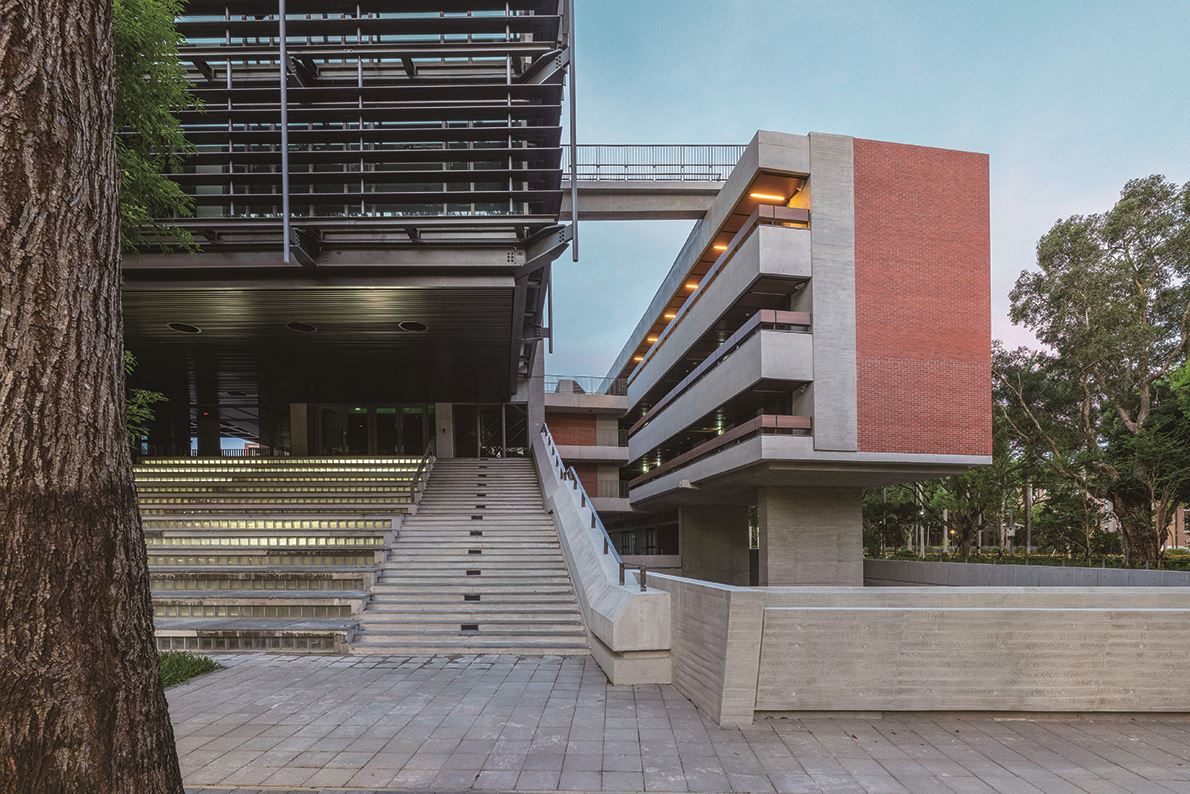
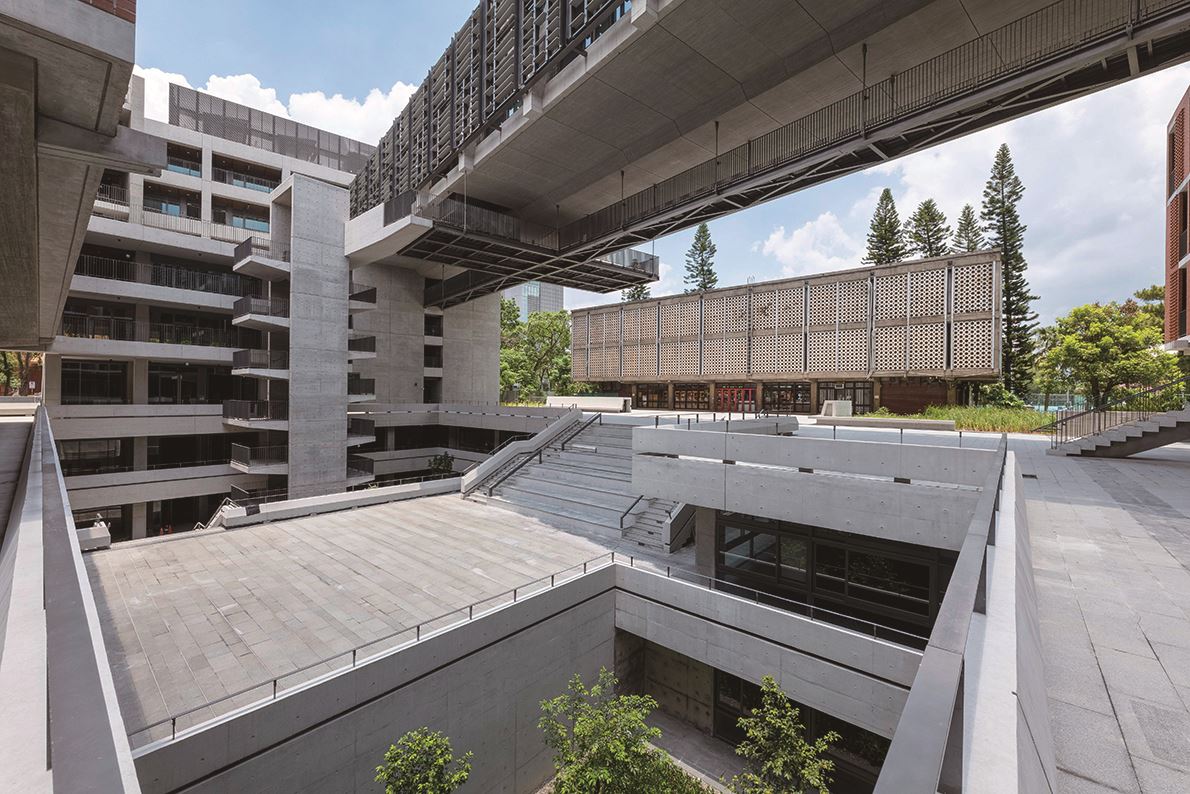
To creates public spaces shared with the city, the west wing on the urban side features a unique suspended structure that provides a versatile open space for the public, and its second floor are bookstore and coffee shop that serve as a window for dialogue between the university and the city.
(2) Liugongjun Canal Blue-Green Belt
Adjacent to the site, the historic Liugongjun Canal branch has been restored as a blue-green ecological belt. Working with the city’s vision, the Humanities Building echoes the effort by providing a spring pool at the southwestern corner, with cascading waterfall flowing to the lower plaza.
Campus Open Space
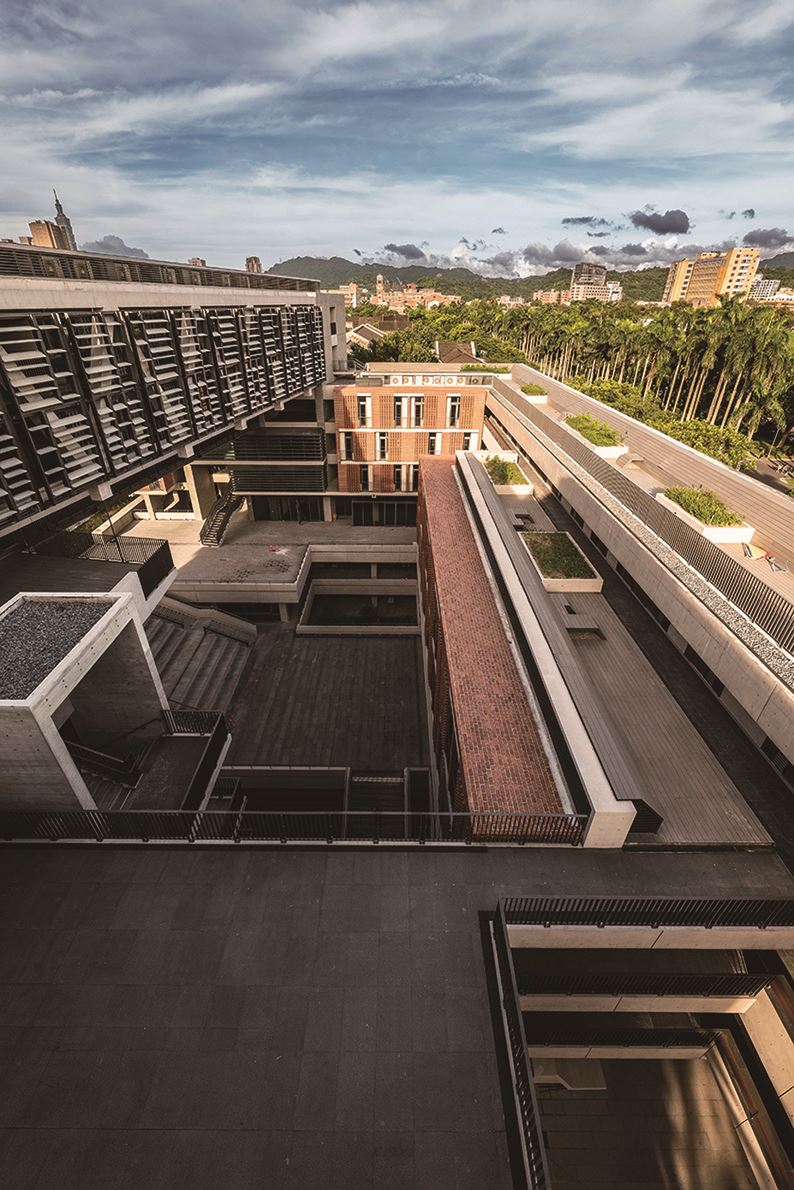
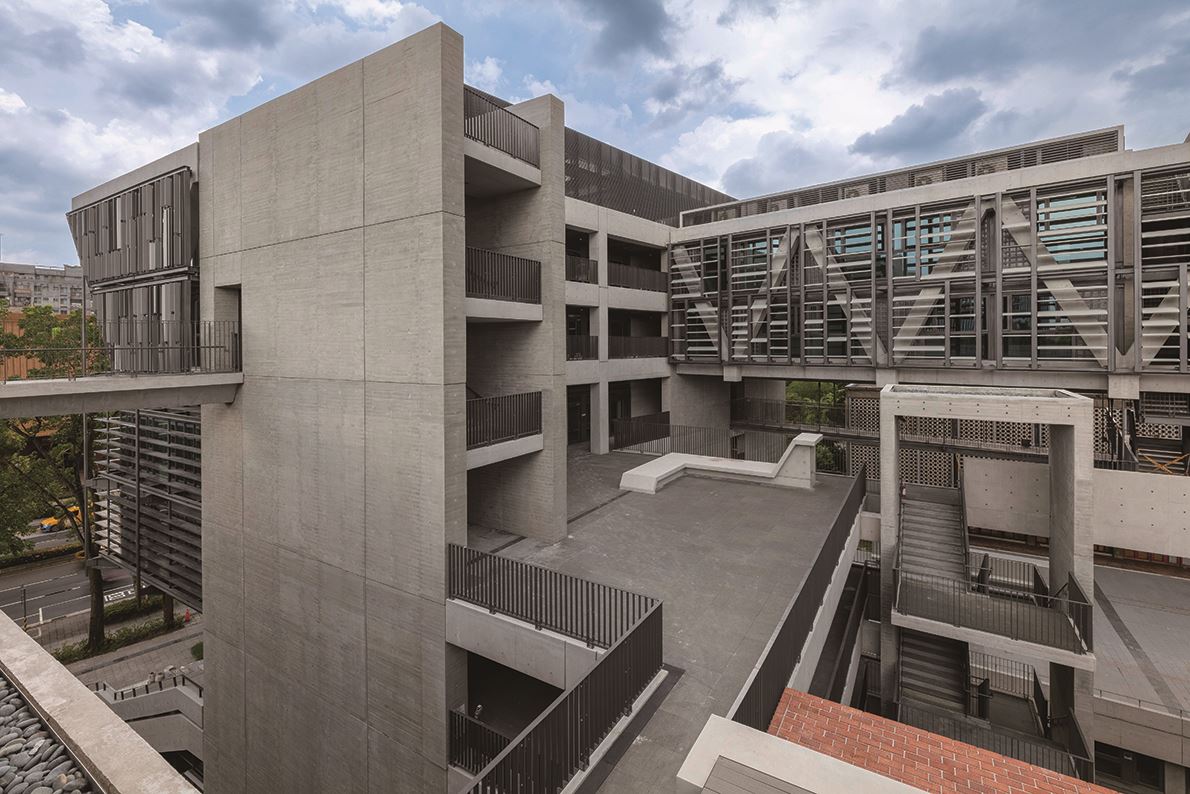
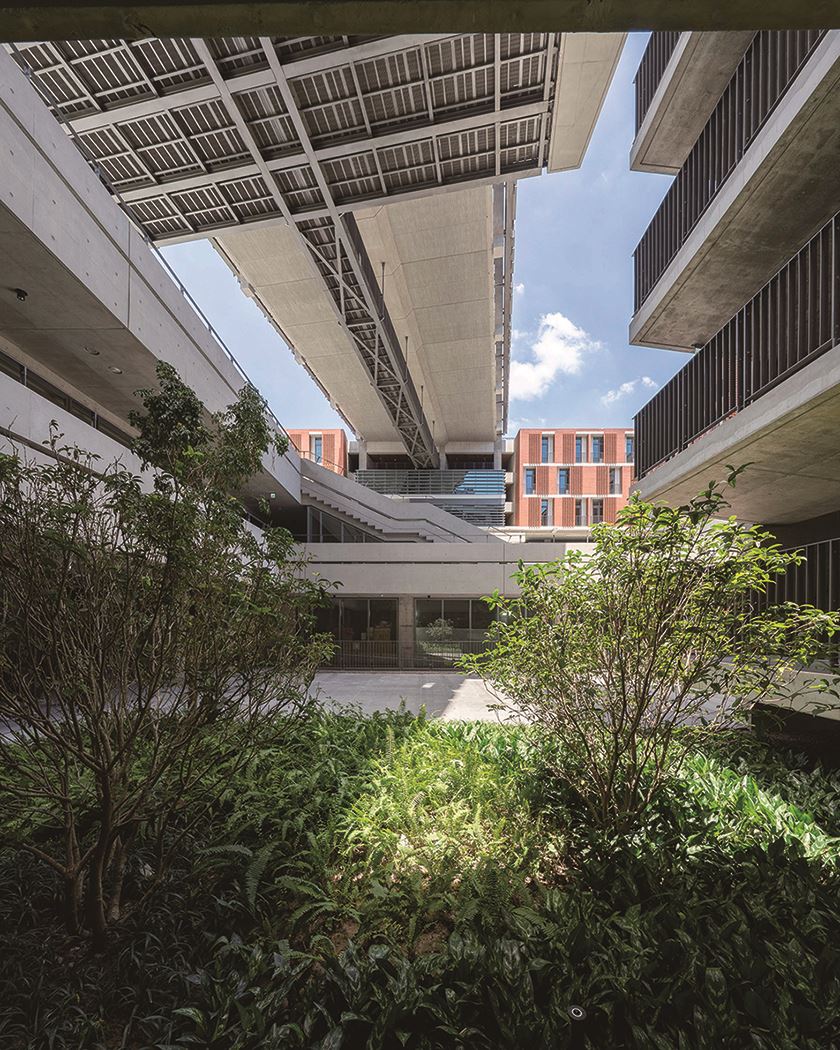
The building features a multi-layered courtyard that offers vibrant, diverse spaces and fluid circulation, breaking architectural boundaries and integrating seamlessly with the campus.
---
一、永續與共融
臺灣大學人文館位於羅斯福路與新生南路交口之主要校門入口,為校園主要軸線椰林大道上的第一棟建築,在百年校園的古蹟與歷史建築環境中,承擔承先啓後、創造入口新意象的角色,在創新的同時,亦照顧與傳統、歷史的「共融」,為串連過去、現在、未來「永續」校園的鏈結。
二、校園與都市界面的整合
1-「開放校園」
打開校園的邊界,除成為與城市共享的校園景觀環境外,人文館的都市側西棟建築以特殊的懸吊結構,配合沉入地下的圖書閱覽空間階梯屋頂,成為提供給都市的階梯式開放空間,拾級而上二樓空間,為台大出版社書店、咖啡店,更是學校與城市對話的櫥窗。
2-瑠公圳藍綠帶
臺大校門西南角為瑠公圳分支的交口,臺大新生南路側除了圍牆的拆除外,更以生態藍綠帶成為與都市更友善的界面,人文館並於西南角瑠公圳址碑旁,於地下二層下沉廣場邊界,設置了湧水池,湧水形成瀑布,傾洩至地下二層,成為新生南路側藍綠帶瑠公圳水源意象之象徵。
三、校園開放空間
此建築最大特色在於由實體建築形塑的立體化合院,不同的尺度與空間關係,成為豐富、多元的休憩環境,由階梯、通廊連結,形成連續流動、層次豐富的空間經驗,打破傳統建築的封閉邊界。


